

2024 was a confusing and unpredictable year for residential real estate in the mid-Peninsula part of the SF Bay Area. Interest rates hovered around 6.5-7.5%, layoffs from large local high tech companies, while NASDAQ index reached a high water mark, and continued low property inventory. While Buyers in 2023 were very cautious, a segment of Buyers in 2024 returned to the market aggressively.
| Year | # of Sold | $/square feet | Days on Market |
| 2023 | 1,269 | 1,201 | 19 |
| 2024 | 1,378 | 1,289 | 14 |
| YOY % | 8.6% | 7.3% | -26.3% |
DIFFERENTIATED PROPERTIES WILL MOTIVATE CAUTIOUS BUYERS

I had a San Mateo townhouse listing at the high end of the range in a neighborhood where one could purchase a single family residence at the same price point. The complex was newer development, awesome huge floor plan of 4bd/3.5ba and 3+ car attached garage with low HOA and close to the freeways and public transportation. While it appealed to a very narrow range of qualified buyers who could purchase a 3bd/2ba single family residence, there also just wasn’t anything comparable like this unit available. We ended up with multiple offers when some thought it would sit on the market first before selling and sold for well above list price. The complex while a bit close to a freeway, there was no noise impact, so we highlighted it as a positive characteristic close to commuting options and downtown restaurants. We just need to find the “right buyer” and not marketing to the masses that many realtors typically default to.
LOCATION WILL ALWAYS BE THE KEY FACTOR
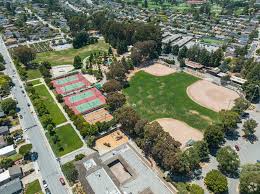
Location is always the key factor in any types of real estate market. The current market has many wary, nervous buyers. I often explain that a property floor plan and condition may be changed with some investment in time and money. A property’s location and lot cannot be changed, so when a property is located in a desirable location, which may include characteristics of the schools, neighborhood feel, flat lot, convenience, views, and/or some other amenities come on the market, I try to help buyers visualize the potential of a place with a future remodel given my experience in real estate development projects in the past. I listed a San Mateo house that was owned by the same family for many decades located just couple short blocks to one mid-Peninsula’s best parks, a nice lot, close to freeways, and a decent floor plan, but it needed some interior updates. We purposely listed it a bit below our target price range expectations with the goal of receiving 3-7 offers. Well, given the incredible location, the open houses were just packed and we received 17 offers, all above list price and the top 7 or so significantly above. The buyers and their agent told me the wife grew up nearby, grandparent taught at the local schools, and they often visited the park with their young kids so the house location checked off every box for them. Needless to say, very happy Sellers and Buyers.
MARKETING AND POSITIONING KEY TO EXTRACTING VALUE
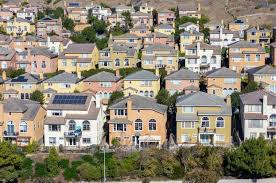
The headline applies to being able to extract maximum value for a popular listing as well as being able to sell a more challenging one. One of my earlier transactions of 2024 was in an unique development in South SF that was only about 30 years old with a large floor plan, high vaulted ceilings and tucked away in one of the higher end communities in the city. The price point is at the very top of the city so it would appeal to a different type of SSF buyer. While it was a single family residence, it was a planned unit development with an HOA not as common in area as it would be in Southern California or East Bay. The way we positioned the unit is that it is considered newer construction when most of the city houses were between 60-90 years old, we updated the interior with some new finishes, and we accentuated that the “value” for a large house with amazing floor plan close to both SF and South Bay is rare for the price point and $/square feet. I advised my Seller that the sweet spot Buyer profile is someone who may be already living in the neighborhood who either owns a smaller place or is renting. Lo and behold, several of the most seriously interested buyers were all living in the neighborhood and it was sold to a wonderful young family who owned a smaller place and wanted to upgrade.
CASH/LIQUIDITY IS KING (OR QUEEN)

I have talked about mortgage interest rates many times over the last 10+ years of this blog. In 2024, the first half saw rates finally starting to come down, but then mortgage rates started rising again. Many of my friends asked if the higher rates affected the Bay Area real estate market. Of course it did for some segment, but not as much as you may think. 1) Move up buyers slower to purchase due to their current very low <3% rates that would make the move up purchase to a larger home and possibly more expensive neighborhood at a 7% rate tougher pill to swallow – constraining inventory. 2) Qualifies for lower mortgage amount particularly for 1st time buyers, and 3) Mentally harder to purchase when prices of attractive properties were increasing making the rent vs. buy equation less attractive.

All 3 of the negative impact were in play, but not as much as you may think. Supply is still low. Buyers delayed purchasing from 2023, but we saw Buyers realize in 2024 that mortgage interest rates would not decrease materially any time soon to its previous 3-4% range. Many of my clients are in the high technology sector with the NASDAQ index reaching historic highs. Those employees with stock options and RSU were able to cash out of some of them for larger down payments; thus, diminishing the impact of higher rates/payments. All but 1 transaction I completed in the last 2 years had larger down payments from 30-100%.
2025 UNCERTAINTY IN THE BAY AREA AND TIPS
The start of the year, inventory remains very low. The high technology industry saw some layoffs and hiring freezes in Silicon Valley so people are cautious. Low supply and cautious demand but with highly qualified buyers, means the most attractive properties priced appropriately are seeing huge numbers of offers. Contrast that with properties that have some major negative characteristic and/or location and priced too high may sit on the market.
I continue to provide the following perspective to my first time buyers. It is very difficult to perfectly time the market. To the extent one has the financial capacity and job stability to make the leap of faith, buying real estate is BOTH a financial investment decision AND a lifestyle choice that is challenging to quantify. The question I pose is do you consider it riskier to be “out of the market” or “in the real estate market” if your plans are to remain in the SF Peninsula area in at least the medium term?
As always, reach out to Peter to brainstorm real estate. In meantime, please “like” my Facebook page to stay updated on my latest blog posts, and upcoming listings https://www.facebook.com/PeterTaoProperties.

 Tao SF Peninsula Real Estate