
The “Google/Facebook/Apple Effect” Coming Soon to Mid-Peninsula Real Estate…

Back in 1996 when I moved to SF Bay Area from NYC after graduating with my MBA, South Bay (“Silicon Valley”) for technology companies, San Francisco for financial services and the Peninsula was a convenient place in between SF and South Bay that had Oracle and some other companies here or there. We chose to buy a house in mid-Peninsula and establish roots here nearly 20 years ago largely due to providing maximum career flexibility in being equidistant between SF, San Jose and Oakland with easy access to all 3 airports.

Circa 2018, San Mateo County is hot with major technology companies and venture funded startups taking on commercial leases of significant square footage with the many new commercial developments around towns. For example, Redwood City is headquarters for Box, Shutterfly, Equinix and many start-ups. Having more and more companies settle around here bodes well for employment growth, and desirability of living nearby to lessen commute times. How does the real estate future look further down the road in 2023? Two big names – the proverbial 800 lb. gorilla: Google and Facebook.

20 years ago, Mountain View (“MV”) was far less desirable city to live in than nearby Cupertino, Palo Alto or Menlo Park. I had a friend who relocated to Bay Area in 1997 and shared a rental house in Mountain View. The house wasn’t great, the neighborhood was questionable and there was nothing to do nearby. Since Google started expanding ferociously in MV with employees working very long hours, people wanted to live nearby work. Then, after Google went IPO in 2004, many employees suddenly was flush with cash and started purchasing real estate; Mountain View started really catching up in pricing metrics to its more expensive neighbors, then more and more nicer restaurants, bars, retail began opening up rendering MV even more desirable. Now Mountain View is an expensive city to live….and that aforementioned starter home in MV would probably sell for close to $2 million. The “Google Effect” on residential real estate.

Menlo Park has always been a highly sought after city with fantastic schools, proximity to Stanford and accessibility to South Bay. Once Facebook exploded on the scene, that had a ripple effect on East MP, Redwood City and even across the Dumbarton Bridge into Fremont and the likes (no pun intended). The current MP headquarters had previously been the HQ of Sun Microsystem, so the incremental impact didn’t have the same boom that Google had on MV. But when FB prior to its IPO, I know that they offered a housing stipend to anyone who lived within some miles from campus given the long hours employees were working to change how the world communicates through social media.

So in 2014, Google purchase approximately 1 million (pinky pointed to mouth emphasizing the M) square feet at Paciific Shores in East side of Redwood City. The offices were mostly leased up, so it would take some years for Google to vacate some tenants, do tenant improvements to Google standards, and then slowly move into the buildings. See link for details. https://www.bizjournals.com/sanjose/news/2014/10/03/google-to-buy-big-chunk-of-pacific-shores-iconic.html. Additionally, Googles rapidly growing Youtube business unit out of San Bruno has been aggressively purchasing office buildings in San Bruno just off the 380 freeway to expand growth at Youtube too. The price appreciation in San Bruno will also be interesting for those buyers who can afford more house in SB than in Burlingame, Millbrae, San Mateo or for those who work at Youtube or in South SF where many biotech firms exist.

The impetus for this article stemmed from recent news that Facebook was close to negotiating around 800k square foot of new commercial space in tony Burlingame. This would greatly affect the mid-Peninsula as FB fills this space with employees. https://news.theregistrysf.com/facebook-eyes-burlingame-with-800000-sqft-lease-at-kyllis-burlingame-point-development/ We won’t observe the direct impact on Peninsula real estate prices in the near term. However, as referenced in previous articles, land is in very short supply in the mid-Peninsula to build new residential housing units, while it appears that we will see greater demand in the medium term future.

Many analysts believe the housing boom is nearing an end in the next 2 years – but I heard the same scuttlebutt and “analysis” 2 years ago too. What do you all think? Do you think there will be a Google/FB effect in next few years? Or do you think the greater economy might eventually soften before that and lessen their impact? How about those of you who live outside the SF Bay Area, have you observed cities impacted by growth of a particular company or industry?

As always, feel free to email me at peter.tao@cbnorcal.com if you wish to discuss/brainstorm SF Bay real estate. Be sure to like my FB Page at https://www.facebook.com/PeterTaoProperties


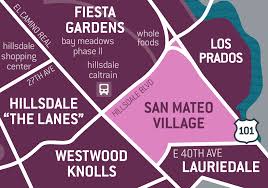
Neighborhoods Close to Downtown Areas and Transportation Options are HOT – San Mateo Village and Other Neighborhoods West of 101 and East of El Camino Real Prime Examples!

images-1.jpeg

Serenity, views, privacy have always been highly sought after characteristics in real estate and continue to command premiums. In the mid-Peninsula, I predicted a trend 5+ years that neighborhoods close to downtown areas of shopping, restaurants and public/private transportation will see above average appreciation as buyers are attracted to areas that require less driving. As the Bay Area economy booms, we see negative impacts to the 101 and 280 freeway traffic and bridge backups; rush house seems to start earlier and earlier. In particular, neighborhoods East of El Camino Real and West of 101 freeway are seeing a huge demand surge of buyers who want to be in close proximity to amenities. Examples of neighborhoods include Mateo/Glendale Village in San Mateo, and Clearfield Park around Laureola Park in San Carlos, are good examples of HOT, HOT neighborhoods in these sub-markets.

You may see on some listings that tout the Walk Score. The Walk Score is calculated by a company, which factors in the “walkability” to amenities such as businesses, parks, theaters, schools, restaurants, retail, transportation and other common destinations. The Walk Score output can be interpreted as:

Walk Score® Description
90–100 Walker’s Paradise
70–89 Very Walkable
50–69 Somewhat Walkable
25–49 Car-Dependent
0–24 Car-Dependent

Generally, 90+ Walk score are in high-density cities such as San Francisco. In suburban cities, neighborhoods scoring in the 50-80 ranges are generally considered in prime areas near amenities highly attractive to many of today’s homebuyers. For example, I had a great listing in San Mateo Village recently that was just blocks away from the Caltrain station, Hillsdale Mall (undergoing a major expansion upgrade), Whole Foods, Franklin Templeton headquarters, Bay Meadows, 101/92 freeways. Based on close to 200 groups attending the open houses, many buyers reviewing disclosures, and the significant number of offers on the house driving price 22% higher than list, the feedback from buyers (besides the beautiful house itself) was the extremely convenient location close to everything.

Unknown

San Mateo/Glendale Village Comparison to Areas W. of El Camino Real

    900 to 1500 SF   900 to 1500 SF  
1/1-5/31 # W. ECR San Mateo # San Mateo Village  
2013 18 694.41 12 641.6 108%
           
2018 16 1314.77 10 1290.75 102%
    89%   101%  

We know every SF Bay property has appreciated significantly in the past 5+ years. If you purchased a property, you did well. “The market is hot”. What constitutes whether a particular neighborhood is “hotter than another”? One gauge might be the percentage appreciation over time relative to the broader market and did it appreciate higher than average. For example, let’s take the aforementioned San Mateo/Glendale Village (“The Village”). In 2013, for a Single Family Residence (“SFR”) between 900-1500 square feet from January 1 to May 31, 2013, the average $/square feet was $641.60; in 2018 from January 1 to May 31, the average was $1,290.75. Compared this with the average $694.41 $/square feet for all SFR in San Mateo West of El Camino Real in 2012 and $1,314.77 $/square feet in 2018. The Village appreciated an incredible 101% in 6 years, while West San Mateo appreciated still a very high 89%. The Village seems to have appreciated at a higher percentage than the historically popular West San Mateo.

Key characteristics in the Bay Area affecting this trend towards living in locations close to things include:

  • Traffic seems to get worse and worse. A recent article suggests that sections of 101 freeway show traffic at 80% worse in 2017 than in 2010. Don’t know how they measured it, but it seems directionally correct from my daily experiences. People already spend quite a bit of time commuting to and from work. When they are home, people don’t want to spend more time in their cars.
  • Being close to public transportation such as Caltrain, BART, technology shuttle buses, and Samtrans provides attractive commuting alternatives.
  • Those that are able to purchase in this expensive area tend to work in demanding jobs. Many of those who chose to live in SF Bay want to be part of the action.

That doesn’t mean everyone wants to be close to a downtown area. Many still prefer being away from everything when they get home. In the current low supply, market, it seems every neighborhood sees strong demand. As I have written about in past blog posts, purchasing real estate isn’t just about financial considerations, but a lifestyle.

As always, anyone want to talk real estate on any topic, feel free to reach out to me at p_tao@yahoo.com or 650-504-7588. Please “like” my FB real estate page at www.facebook.com/PeterTaoProperties; it’ll be focused more on articles rather than just marketing my listings.

Wow, what a strong 2017 in terms of price appreciation and stock market gains – will it continue in 2018?

images-2

I wrote a post this time last year discussing uncertainty in the real estate and stock market post Presidential election, along with potential for increase in interest rates. Similar sentiments of uncertainties existed even 2 years ago. The uncertainties turned out to be unfounded as the S&P 500 appreciated EVERY month in 2017 ending at 19%+ higher than start of year. https://seekingalpha.com/article/4134832-stock-market-1st-90-years. Going into 2018, many Wall Street analysts predict the stock market to continue rising, albeit not quite as rapidly as last year. https://www.cbsnews.com/news/can-stock-market-in-2018-possibly-match-perfect-2017/. So what does that mean for real estate?

Our current SF Bay Area real estate boom roughly started at the end of 2012, which has now spanned more than 5 years. The bubble burst occurred approximately 2008-2011. As my BS and MBA degrees were in finance with heavy dose of economics, I recall that the financial and real estate markets over the course of history generally run in full 7 to 10 year economic cycles. We are currently right in the middle of this time span, but yet there are not many indications of an impending slow down.

images

Two years ago, I wrote about unicorns – how private company valuations do not necessarily represent liquidity events for a high majority of non-founding employees of these companies. https://taosiliconvalley.com/2015/12/15/the-epic-story-of-unicorns-and-dragons/. With that being said, many investment bankers and financial pundits do forecast some of these unicorns to go public in 2018. https://www.marketwatch.com/story/ipos-in-2018-here-are-six-tech-companies-that-could-go-public-2017-12-26. Many of these potential IPO companies are based in San Francisco, Peninsula or South Bay. Should even a few of these companies go public, we can expect some thousands of employees unlock previously illiquid paper wealth into cash that will motivate some of them to enter the real estate market, upgrade houses and/or buy investment property. This would have a material impact on real estate demand, and thus valuations.

My most popular blog post titled “Microeconomics for Real Estate 101” is the #1 ranked Google search result if you type Microeconomics Real Estate! Search Engine Optimization (SEO), baby…and I didn’t even try! 5 years later, same dynamic of a) strong demand and b) tight supply yield consistent price appreciation. For example, in Belmont and San Carlos, two appealing cities with top public schools, great location and strong community (as of January 23, 2018), there are only 13 single family residences (houses) Active in MLS at all prices. What if you are a 1st time buyer under $1.5 million? There are only 2 (yes, not a typo, two) houses listed under $1.5m across 2 major cities in the Peninsula.

For the last 2-3 years or so, EVERY buyer client of mine asked if they are buying at the peak of the market. No one has a crystal ball and can predict with certainty. We all have our personal predictions/opinions of course. It’s tough on 1st time buyers looking at historical price appreciation of properties in the SF Bay Area. I always like to fall back on my own personal situation. Back in 1999, we were looking to purchase our 1st house in mid-Peninsula. We outbid many other buyers and were paying record prices for a small house. I told my wife that we may be buying at the peak of the market, but that the Bay Area would be our long-term home; regardless of whether the market goes down in the near term, I was confident over the course of the medium to long term, Bay Area real estate would prove to be a great investment. We ended up buying a larger house in the area, and sold this original house in 2005 with an ROI of over 400% (due to leverage)! The market had in fact deflated approximately 2001 but then came roaring back shortly thereafter.

The key to psychologically overcoming the SF Bay Area market is to view any real estate investment in the medium to long term. If you plan to be a SF Bay Area resident in the long term, is it higher risk to be in the market or out of the market? And keep in mind, unlike buying stocks, bonds, mutual funds and ETFs, you actually also gain enjoyment and comfort with acquiring property as opposed to financial securities. As always, anyone who wishes to talk real estate with me, ping me anytime.


2017 – the year of uncertainty with mortgage rates, stock market and the new President…

Average
1990 10.13%
1991 9.25%
1992 8.39%
1993 7.31%
1994 8.34%
1995 7.93%
1996 7.81%
1997 7.60%
1998 6.94%
1999 7.44%
2000 8.05%
2001 6.97%
2002 6.54%
2003 5.83%
2004 5.84%
2005 5.87%
2006 6.41%
2007 6.34%
2008 6.03%
2009 5.04%
2010 4.69%
2011 4.45%
2012 3.66%
2013 3.98%
2014 4.17%
2015 3.85%
2016 3.65%

The above chart is compiled by government entity Freddie Mac on 30 year fixed rate mortgages. See link for source. http://www.freddiemac.com/pmms/pmms30.htm. In November 2013, when mortgage rates went up to the low 4% range, I wrote a blog post on mortgage rates and highlighted key considerations for home buyers as well as offer historical and life perspectives on how to factor that into home buying decisions. I just re-read the post for 1st time in a few years, and I stand by all the key points mentioned. In fact, since it was published, rates for most of the last 3 years hovered below 4% and only recently increased to the low 4%. You can read my original blog post at https://taosiliconvalley.com/2013/11/08/mortgage-rates-have-risen-since-its-all-time-low-should-this-impact-your-timing-to-buy/.

As you can see, low 4% by historical standards is still incredibly low. I was cleaning out my garage last month and came across files from 1999 when I bought by first house. My first mortgage stood above 7% (yes, that is seven). No joke. Then when I refinanced later at 5-6%, I thought it was the lowest it would go, then refinanced again at 4-5%. Never during those times did I ever think it could ever get below 5%, let alone 4%. Two key considerations in today’s market would be 1) rates are still very historically low, 2) no one can completely predict where interest rates will go.

In my original blog post, I calculated payment differences on a sample mortgage based on an increase in interest rate. Will increase in mortgage rates affect average housing prices? Mathematically, yes. But there are other factors that also factor into housing prices such as local economy, supply and demand dynamics, stock market, and macroeconomic factors creating “noise” in housing prices.

This blogs most popular post was also from 2013 titled Microeconomics 101 for Real Estate. This post actually gets quite a bit of traffic, as if you Google “microeconomics real estate” my blog shows up in the #1 slot of Google results! SEO traffic baby! So basically, supply in SF and San Mateo counties is very low. That is somewhat to be expected as we are only in late January, but historically we do start seeing more listings come on the market starting about now.

There also seems to be a sentiment of uncertainty with respect to a new President. A highly controversial President is probably creating  uncertainty as well. 

I don’t have a crystal ball on what will happen. I continue to tell my friends, family and clients that no one can predict what will happen to the stock market or real estate prices. If they could, they’d be able to take advantage of it in the markets and retire from it. I’ve read many economists predict that there will be higher interest rates and inflation in 2017. I certainly believe this to be a strong possibility. However, some predicted that last year too. What I am bullish on is the overall strength of our local Silicon Valley economy. Who knows what will happen in 2017 as there could be short term movements in real estate values and stock prices up or down? But if the SF Bay Area is a medium to long term home for you, my belief is it’s a higher risk to try to time the market perfectly and be out of the market than it is to jump in. In my very 1st blog post, I wrote about buying my 1st house in 1999 in San mateo where I thought there was a high probability I was buying at the markets high point. Wow, 20/20 hindsight and the thought that I was worried I overpaid is quite amusing. 

Here’s to a fruitful, safe and healthy 2017 to all.

The Epic Story of Unicorns and Dragons

Unicorns are everywhere in SF Bay Area! It seems like we read about new “Unicorns” being created every week. The mythical Unicorn is described as a beast with a large, pointed, spiraling horn projecting from its forehead. Ancient Greeks and other European folklore reference the unicorn throughout history. I even have a first cousin who built a hugely popular Unicorn propelled vehicle where he rides around at Burning Man, the Maker Faire and parks around Davis, CA drawing hoards of attention. We all love unicorns. But alas, I don’t speak of the legendary beast. I reference those privately held technology companies with private valuations of over $1 billion dollars labeled as a “Unicorn”. As tracked by the Wall Street Journal and Dow Jones Venture Source study, there are now approximately 116 Unicorn companies, including Uber, Snapchat, Airbnb, and Dropbox with a large percentage of them based on the SF Bay Area. Are Unicorns real or mythology? Does working for a Unicorn equate to wealth and happiness in life? And how does the Unicorn SF Bay Area economy translate to the local real estate market?

dragon

But have you heard of the growing “Dragons” within the mid-Peninsula? It used to be that there was only one Dragon in the mid-Peninsula, but now the Dragon community has grown to several more just the past year or two. Confused? Yes, the creatures with the serpentine and reptilian traits that may even spit fire and fly! Dragons are in Greek Mythology and prevalent in Chinese culture – sometimes in fierce settings and other times symbolizing wealth and power. Well, Dragons in this untold story are mid-Peninsula cities with houses that now command a minimum of $1 million for a small 1,000 sq. ft. or larger house (as defined as single family residence). Although these 1,000 sq. ft. houses are not large, they are highly appealing due to a great convenient location to SF and Silicon Valley in the mid-Peninsula, and have strong school districts. There is a small, but growing list of cities that I now call a “Dragon” city. Just 2 years ago, the only city that may be labeled a Dragon was Hillsborough. You can now add Belmont, Foster City, Burlingame and Redwood Shores to the list. Do note this categorization includes on SFR and not condo/townhouses that may be had for less than $1 million. By the way, I believe I just invented this new terminology, “Dragon”, which is probably why you have not heard of it before.

In Belmont and Redwood Shores, often linked together given the same highly ranked Belmont-Redwood Shores school district, a year ago had one last neighborhood of Sterling Downs/Homeview where fixer-upper small houses could be had for $850-900k. However, in 2015, the same small 2/1 or 3/1 1000 sq. ft. with 5,000 sq. ft. lot houses in the neighborhood were selling for between $1.0-1.2 million. The top ranked school district certainly has propelled Belmont prices in past few years. See my earlier post on Belmont at this link. https://taosiliconvalley.com/2014/06/17/why-belmont-housing-is-hot/

Up until a year ago, there were some pockets of homes in mid-Peninsula where there may have been a few under $1 million fixer upper houses, particularly in Lyon-Hoag, Burlingame Gardens and the neighborhoods between 101 and Caltrain tracks. However, Burlingame is firmly a Dragon now. In the past 180 days, there were 112 SFR properties sold in Burlingame and only 2 of them sold under $1.2 million ($1.06 and 1.198mm). Yes, the Burlingame Dragon is fire-spitting fierce.

Those who are familiar with mid-Peninsula might be asking why isn’t San Carlos or Menlo Park included as a Dragon? In San Carlos, there is one last bastion of houses that can still be had for between $900k to $1 million in the Clearfield Park neighborhood walking distance to Laureola Park. That is the neighborhood located between El Camino Real and 101 on either side of Holly street. Make no mistake, houses that are upgraded goes above $1 million, including a recent sale on very busy Holly street that went above that threshold. However, there have been some recent sales below $1 million for fixer upper 2 bedroom 1 bath around 1000 sq. ft. houses. So if you want to get into the San Carlos school district living in a house, you may consider this neighborhood. And in Menlo Park, right next to the Facebook headquarter campus, there is a neighborhood called Bellehaven that may have houses just below $1 million. Both of these cities may very well be a Dragon within the next year if the real estate market continues to appreciate.

There have been recent articles in the Economist discussing the Unicorn valuations and the difference between private company valuations vs. realities that many/most of these private companies never see true liquidity events for the non-executive employees to truly cash out, as well as the inflated private valuations that provide preferential structures to VC and PE firms as well as founders that ultimately dilute the common shareholder should there be a acquisition or future funding round or IPO.

http://www.economist.com/news/leaders/21679194-correction-startup-valuations-would-be-good-news-technology-sector-gored

http://www.economist.com/news/business/21677192-fable-unicorn-theranos-much-hyped-medical-startup-plagued-doubts

I have been lucky to be part of two great start-up companies back in my former start-up corporate life. I had been a VP-level executive at a high profile Internet company that went public in 1999 during the first dot com bubble and reached over a $1 billion market cap – this is 16 years ago when $1 billion was a really, really big number and impressive. Then, I held a senior position in 2007 for another high profile Internet company that sold to a private equity firm for $1.2 billion valuation which was one of the 1st companies to achieve a huge return for VC investors post bubble.

Although there was a nice financial gain in aggregate, in both instances the upside was severely capped due to stock being illiquid. One had a 6-month post IPO lockout, and the second had been bought by a PE firm who bought majority stake, with the minority stake and unvested portion remaining privately held. Eventually I found out the second Unicorn went through difficulties and company recapitalized with the value of my share holding down to zero; thus, I will now have a $3k capital loss write off for the remainder of my life recouping the AMT tax I paid to Uncle Sam over 7 years ago. Thus, as you read about all these Unicorns being created, just note that majority of non-executive/founder employees at these companies have not yet profited from their stock options.

uncle-sam

Why do I say I was “lucky” even though my private stock options never yielded the financial homerun that I held on paper? Three reasons. First, to this day, I am really good friends and business confidants with many of my former colleagues that I value more that money. Second, those were really fun formative years where I grew professionally and personally and felt I was part of something revolutionary. And third, those experiences in the high tech start-up world has allowed me a very unique perspective to the SF Bay Area real estate in a in strongly technology driven marketplace where I’ve “did it and done it” that allow me to adeptly navigate the competitive landscape of real estate.

On the real estate side, I have owned real estate located in the mid-Peninsula since 1999, and have seen huge returns. My clients who purchased properties in the past 5 years are obviously all extremely happy they are “in the market” now. I get asked nearly every week what I think the real estate markets will do in the near term. I have inclinations and my thoughts. However, no one can truly predict and time the market perfectly. Two considerations I like to provide is a) that if SF Bay Area real estate is a medium-to-long term hold (similar to the US stock market), over the course of time, the SF Bay real estate market has proven it’s ability to appreciate over the course of a 7-10 year economic cycle and b) particularly for 1st time buyers that unlike other financial investments, even in a downturn, at least the investment in a property can be enjoyed through day-to-day living and that provides some immeasurable intrinsic value.

So to my 1st question of whether Unicorns provide wealth and happiness – it can possibly create wealth, but it is not guaranteed and it can possibly provide some happiness but that is also not guaranteed. And I think most would agree that monetary wealth doesn’t automatically guarantee happiness.

Certainly, the technology industry creating Unicorns does have a direct impact to the creation of Dragons. Regardless, as they say, home is where the heart is; purchasing real estate in expensive SF Bay area is both a decision on financial investment considerations and creating a home to settle in. I suppose housing prices in this area is still lower than the cities in NYC, London, Hong Kong and Toyko; we may need to create a different terminology for those cities, but alas, I’ve used up all my creative writing juices.

r169_451x253_14254_Dragonhouse_2d_fantasy_illustration_dragon_house_children_picture_image_digital_art

Where’s the Beef? Er, I mean listings on the market more than 2 weeks….What does this mean for potential sellers?

Wheres-the-Beef1

The year was 1984, and a new Wendy’s television commercial caught fire.  An elderly lady with this raspy voice would yell into her telephone asking “where’s the beef?” to some competitor burger joint of Wendy’s complaining about the small hamburger size of their product.  I remember as a kid, everyone in school would use that line for almost any situation. “Where’s the beef?” catchphrase kept going for years after launch.

Current year 2015….over 30 years later…I was just looking at one of my MLS saved searches (on 4/17/15) – single family residence (house) listings Active on MLS in cities from Millbrae down to Palo Alto under $2 million list price that has been Active on MLS for 20 days or more. There are 12 cities in the search.  Guess how many houses there were?  75-150 might be a reasonable guess given the low inventory, high demand real estate market in the mid-Peninsula market.  There were only 25 houses that have been on the market for more than 2 weeks and not pending sale.  That equates to approximately only 2 houses per city.

Although I am not precisely tracking data by recording in a spreadsheet, I have had this internal MLS sort for approximately 4 years now. I do not remember another year, regardless of month of year, where SFR 20+ days in this mid-Peninsula area of 12 cities was able to fit on the 1st page of my web search. Properties sell within 1-2 weeks on the market given low supply and high demand. So, what does that mean for sellers and buyers?

For sellers, you may think this might be all great news.  Both yes, and no.  If you are seller moving out of the SF Bay Area, this should be great news.  Sell your house and be able to buy a bigger house for less money in nearly anywhere else in the US (NYC excluded). Even though other parts of the US also is showing strong appreciation with low inventory situation, it is unlikely to be at the same level as the SF Bay Area.

However, if you were a seller looking to purchase a bigger house in the same area, then there might be challenges. They are not insurmountable, but definitely trickier: 1) buy bigger house 1st if you qualify for 2nd mortgage or can purchase all-cash, then sell current home after purchase, 2) sell current house 1st, negotatiate rent back, and aggressively seek to find AND secure new house before having to move out with back-up plan having to move to temporary residence, and 3) buy bigger house 1st using alternative/hard money lenders, then sell current home after purchase and finally refinancing into traditional mortgage paying off alternative loan. Some other options exist, but those are most common possibilities.

As a seller, it may seem that you may need to do less work to prepare your house for sale. Yes, and No. That may be true to simply “just” sell the house. However, the best agents will still advise you on possibilities to be put your property in the best light to maximize your sale price. Because of my construction project experience, I almost always will talk to my seller clients about possible projects to do to the property prior to selling with some estimated rough range on cost and what the estimated ROI percentages will be on potential upside.  This provides a framework for my clients to decide if the wish to invest time and money into the house to potentially increase sale price. My seller clients really appreciate my outlining in detail their choices so they can make decisions even if they ultimately do the minimum required. Some agents will default to not doing any work or even convince homeowners not to do work, since they can get it on the market sooner and they still know it will sell and it requires less effort to them. Although timing is always a factor in the decision matrix, I believe it is still important for the homeowners to know their options and understand the risk/reward and possible financial outcome of each option.

As always, feel free to contact me if you wish to brainstorm anything related to your home.


Why I lectured some relatives about their smoke detectors over Thanksgiving…..

0205-fire-safety-pdf-5-728

I just returned from LA where I visited some relatives over Thanksgiving weekend. Good trip, great food and awesome weather. Some retired relatives have lived in their house for over 30 years. They’ve updated some items inside the house but other parts of the house have original details. One part of the house, they have unwittingly ignored is their smoke alarms. They do not work, and the smoke alarms are probably 10-20 years old – none of them have working batteries and it’s not certain the detectors even work at all. When asked why they don’t replace the batteries or detectors, they indicated that the ceilings are too high or that they simply forgot to do so. I spent the next 10 minutes lecturing them on the importance of smoke detectors/alarms and how dangerous it is to live without them.

In selling real estate, one of the California state laws require that “every single-family dwelling and factory built housing unit sold on or after 1/186 must have an operable smoke detector, approved and listed by the State Fire Marshal, installed in accordance w/the State Fire Marshal’s regulations….”  In fact, some local cities impose even more stringent smoke detector requirements. When I recently completed a bathroom remodel to my own house, the city inspector checked my house for working fire alarms and even instructed me to add a smoke detector to a part of the house before he issued the final approval. I was happy to comply.

As part of closing a real estate transaction, one of the disclosure documents that must be signed is a Certification of Compliance with Water Heater, Smoke Detector and Carbon Monoxide Device Requirement. Simplistically, the Seller/Owner signs the certification that they/the house is compliance prior to close of escrow. On the deals that I close as either the listing or buying agent, one of the real estate agents on the transaction ends up providing a working smoke detector on behalf of their client literally the day before close of escrow. Obviously, this is not the ideal scenario because it means the owner had been living on the property without proper working detectors previously.

Nowadays, it’s not just smoke detectors but also carbon monoxide devices. There are many brands that sell single units that detect both smoke and carbon monoxide.

The “chirping” of low battery life is annoying. Over the years, I’ve had to wake up in the middle of the night to dismantle the battery to stop and then procrastinate for weeks before replacing the batteries. I can only imagine the extra hassle it would be for an elderly person to carry a stepladder up the stairs and then have to replace batteries. Low and behold, they now make detectors that come with a 10-year battery life – hooray!

Smoke/carbon monoxide detectors are relatively inexpensive these days. You can see the link below from Homedepot.com that a combination smoke/CO2 detector with a 10-year battery life only costs $40. This investment now lasts for an expected 10 years and replacing the units is very easy. Below is a link for an example of one such unit.

http://www.homedepot.com/p/Kidde-Battery-Operated-Combination-Smoke-Carbon-Monoxide-Alarm-with-10-Year-Sealed-Lithium-Ion-Battery-21010262/204249510?N=5yc1vZbmgjZua

My relatives who I had to lecture were probably annoyed at me for the tone I took, but I am completely comfortable with having done so. It’s a safety issue, and I lecture only because I care and am concerned about their welfare. The only redeeming outcome of the exchange is that I now know what present to get them for the holidays. I will probably purchase nine new units and install if for them throughout the house. No, it’s not a fun gift, but one of necessity to all households alike. I don’t believe they read this blog so hopefully it’ll still be a surprise gift!

Have a fun, safe holiday season!


Are you Bearish or Bullish in Today’s Real Estate Market?

Bulle_und_Bär_Frankfurt

Recently I had a conversation with a local Peninsula friend of mine who I’ll call “Fred”. He is one of my go-to-friends for talking about the stock market, investment opportunities, technology industry, and general business topics. We hadn’t talked about the markets in over a year and compared notes about our opinions. He asked me how real estate was going and what my thoughts are of the current marketplace. I asked him his opinion of the stock market valuations and strength in Silicon Valley at a macro level. The local economy, stock market valuations, health of technology sector, regional job growth/decline, etc. are all strongly correlated with the current situation of local real estate markets.

My friend is a former law partner at a Tier 1 law firm turned technology executive of a company that went public several years ago who views business in a highly analytical fashion. Like myself, Fred has also been living in the Bay Area for 20+ years having been through the dot com bubble of 1999-2000, the subsequent bust of 2001, to Web 2.0 & subprime mortgages in mid-late 2000’s, then the economic depression thereafter, and the current surge of the technology sector, and real estate for the past several years.

There are similarities between 2014 and previous strong economic times in last 20 years.

  1. Early stage start ups getting VC funding thereby creating exciting opportunities for technical and even non technical labor offering attractive compensation packages of salary + equity
  2. Established Fortune 1000 players growing year-over-year, generating health cash flow, and reinvesting it in new jobs, capital investment, acquisitions to further stimulate the economy.
  3. Private equity/hedge funds/venture capital firms with surge of capital from insurance companies, pension funds, and endowments looking for attractive investment opportunities. Post equity investment or acquisitions, early employees often get an influx of cash that allows them to pay off debt, invest in equities, and/or buy their 1st home or upgrade houses.

A by product of all this is my observation of traffic on highway 101, airplane flights where there are rarely empty seats, and sub-contractors charging higher prices due to all the construction activity occuring.

Since I am in real estate, and given my financial background, I get asked all the time what I think of the stock market and real estate prices. Are we at a peak? How much higher can things go up? Is this the right time to buy/sell? The challenge is it is very difficult to truly time the market. For example, if someone believes there might be some technology stocks overvalued right now, that investor would want to “short sell” the stock. However, the risk is that even if the prediction of valuation is correct, it is hard to accurately gauge whether it will take 6 weeks or 18 months for the stock price to move in that way given the innumerable variables that factor into everything.

EconomicGreenfield-9-28-10-MacroMarkets-Projection-Chart

It is similar with real estate. I know a friend of a friend who around 1998 thought the real estate value was at its peak and they ended up selling their house to “time the market”, moved back with their parents with the goal that they would buy a bigger house at a lower price when the market correct. Unfortunately, real estate kept going up for several years and when they realized that they “timed” it wrong, they were not able to afford to buy back into the real estate market. What compounded it all was when they realized their mistake, they actually could have bought back in but would have had to purchase a smaller house than what they had before, but they kept holding out hope that they would eventually be right all the while the market kept running up in 1999 and 2000.

Neither Fred nor I really can predict what will happen. We certainly have some predictions and opinions on what is happening. But for me, I view my own house and my stock portfolio on a medium to long-term horizon. My stock portfolio goals is for capital appreciation in the next 10+ years that will serve to pay for my children’s college expenses and eventually my retirement. I seek out investment opportunities for companies that have strong fundamentals and will survive and thrive over time through recession and boom times. Same with real estate, I know I will live in the SF Bay Area for the long haul, and I wish to be comfortable in my own home. Regardless of my beliefs around short-term economic outlook, I continue to be long term positive on Silicon Valley and rest of Bay Area as a geographical location that has great weather, amazing outdoor opportunities, culture, and a hub of highly educated people that companies want to be located near so that will continue to create job opportunities. When I bought my first house in 1999, I thought there was a chance that I was buying at the peak. However, I knew I would be living in the area for a long time so justified it in my mind that over the next 10 years, I felt confident it would be a worthwhile investment regardless of short term movements. That first house turned out to be an amazing investment generating a large IRR and providing comfort to my living situation.

Why Belmont Housing is Hot

f3d7eb369018e88ca22229518c996fe9

Within my real estate office, I am one of the go to resources for all things Belmont and Redwood Shores with respect to the community. I have had a lot of questions recently concerning some quirky rules for the city of Belmont as it relates to real estate as well as nuances around the school district. Yes, San Mateo County, the “mid-Peninsula” real estate prices continue to increase due to low inventory and strong demand (see previous post https://taosiliconvalley.com/2013/08/26/microeconomics-101-for-real-estate-2/ ). The quaint city of Belmont has always had admirers, but remained a bit under the radar for those who don’t live in San Mateo County. Andecdotally, it seems Belmont has increased in popularity of recent years with nearly every listing generating significant number of offers from home buyers wanting to be part of the community. Why is this dynamic more precipitous than ever? Although this oversimplifies the dynamics….part of the explanation is around the many positive developments of what was already a strong school system. The attractiveness of Belmont includes Water Dog Lake Park, hiking/biking trails, proximity to transportation, and friendly, highly educated people. What ties all of these things together is the award winning Belmont Redwood Shores School District.

images-14

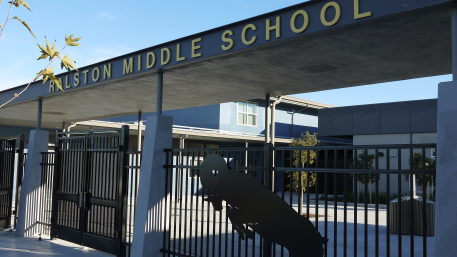
Yes, other nearby cities also have good to very strong public schools. The Belmont Redwood Shores School District has experienced overwhelming community support in the form of passing multiple bond measures and parcel tax measures in the past several years that has allowed Belmont to completely upgrade deferred maintenance, modernize facilities and advance technology investments in the elementary and Ralston Middle schools. Every Belmont elementary school saw major construction projects over the past 2 years that improved the schools significantly and expanded some as well. Within Redwood Shores, Sandpiper is relatively new having been built in the mid 1990’s and Redwood Shores elementary opened in 2010. These schools are nice, clean and (now) modernized. What parent wouldn’t want their kids go to a “newer” schools that rank highly in the state with active parents and a supportive community? It used to be that many of the elementary schools saw strong API scores and would attract homebuyers. Now people hear about the community activism of supporting children’s education above and beyond test scores, and then see the beautiful facilities, before deciding that they will do whatever they can to buy a house/condo in Belmont to be able to send their kids to the schools.

Below summarizes the Belmont Redwood Shores API scores from 2013:

    • Central 935
    • Cipriani 910
    • Fox 915
    • Nesbit 865
    • Redwood Shores 928
    • Sandpiper 938
    • Ralston Middle 907

Belmont and Redwood Shores passed multiple bond and parcel tax measures. Measure U in November 2008 raised $78 million to keep classroom sizes smaller and maintain some enrichment programs, Measures I and N in November 2010 raised $25 million for Ralston and $35 million for the Belmont elementary schools to improve and expand the buildings/facilities. Measure R in November 2013 maintained an expiring $174 parcel tax to support the schools. All of these measures passed with the voters on the 1st try showing a true testament to the community. Passing these measures took time from enormous number of volunteers to drive the campaigns, make phone calls, donate funds, and print marketing materials to educate the people. Then, the people responded overwhelmingly in the polls.

Additionally, there are 3 new City Council members elected/appointed over the past year. Eric Reed, Charles Stone and Cathy Wright all of whom are active in the schools, youth sports and general community happenings prior to them winning a seat on the City Council.

So it’s all positive right? What is the consequence of this popularity?  Simple….a projected continuing growth of school aged children in Belmont and Redwood Shores that will stress school site capacity in upcoming years. There are no easy answers. Many cities/school districts in the Mid-Peninsula face the same challenges. As an example, neighboring San Carlos is seeking new land to build a new school on and evaluating various options to manage growth in their school district.

The mid-Peninsula being midway point between San Francisco and Silicon Valley, nice weather, close to mountains/ocean/bay and really strong schools just offers a balanced lifestyle….and with little raw land to build on, there is just limited supply of new housing units to help absorb this demand. With many changes to the city, and the community support, Belmont may no longer stay sleepy in the shadows of their larger cousins nearby.

Cost and Return on Investment Estimates for Home Remodeling

remodelingcartoonimage

As a real estate professional, I get asked regularly the following question…”what is a rough estimate to upgrade/replace/fix <fill in the blank> in my house?”. I love talking real estate. I am passionate using data and analyzing information to discuss options with people. I enjoy brainstorming home projects with people, and am good at providing insight to my clients on potential ways to modernize, change floor plans, and remodeling options on houses they own or are considering making an offer on.  But, it is incredibly difficult to answer very specific question around cost estimates or ROI, primarily due to a huge range in quality of finishes, labor cost, unexpected costs, differences in people’s houses, individual ability to negotiate, geography, space layout, and myriads of other factors. I thought I would write a bit about this dynamic after I just read an article on Yahoo News on “what is the rough estimate of a Return on Investment of a specific home project”. The reason is all these various articles estimating ROI in the United States is not as relevant in the heart of SF Bay and in particular in mid-Peninsula cities where average condo/house sale prices is almost $800,000 and a small 3bd/2ba starter house that requires work in San Carlos, Burlingame, San Mateo, Foster City, Redwood Shores, Millbrae, Menlo Park, and Belmont surpasses $1+ million.

http://news.yahoo.com/home-remodeling-projects-worth-money-155500763.html

http://money.usnews.com/money/personal-finance/articles/2012/10/25/renovations-that-yield-the-best-return-on-investment?page=2

You can see in the article that states the home improvement projects yield below 100% return on investment (ROI) from a re-sale perspective. In the San Francisco Bay Area where homes are selling from between $600-900 per square feet and demand outstrips supply (see previous post, https://taosiliconvalley.com/2013/08/26/microeconomics-101-for-real-estate-2/)  projects such as a kitchen or bathroom remodel generally will yield well above 100% return on re-sale. I don’t like providing blanket statements like that, because the homeowner can certainly “over improve” a space relative to the neighborhood/house, or design to a very specific taste whereby the ROI may be under 100%. When the $/sq.ft. and the average price of a home is so high, the threat of not seeing a good ROI is significantly mitigated relative to other parts of the US where $/sq. ft is much lower than what we see in Silicon Valley.

I indicate kitchen and bathrooms since those projects require more of an upfront investment to do the project but also since these are key rooms that buyers pay attention to and homeowners have pride over. There are other projects that should easily see an above 100% ROI in our location – new paint (interior/exterior) and flooring readily comes to mind.

In terms of cost estimates, I get asked the most about bathroom and kitchens….surprise, surprise. Let’s start with bathrooms, this has a big range for a complete “gut job” remodel project. For a Master Bathroom (for a smaller “regular bathroom” cost estimates are lower), let’s go with anything from $3000 to $50,000. For $3-5k, you are likely doing most of the work yourself, it’s off the shelf big box store vanity/mirror/lighting with no moving plumbing or electrical around and no special tiling work, and is only a small, basic bathroom. I was recently at a high end bathroom showroom store looking at what I thought was a “higher end” vanity. It was around $6k for a 60″ vanity/countertop. It was beautiful. Then, I looked around the showroom and was a kid in a candy store. Everything was so shiny and awesome. First, that vanity the salesman told me was the “least expensive” in the showroom. They had small 30″ half bath vanities for $10-15k, bathroom faucets for $3k, standalone tub for $2,500, a steam shower set up for $4k. You could easily spend $50,000 (or even much more) for a sweet set-up that you probably see on the old TV show “Cribs”. But more realistically for us regular people, a part of your cost component will be whether you are moving plumbing, do you need to upgrade electrical, new lighting, are you doing custom tile work, type/brand of fixtures, jacuzzi tub or just soaking tub or a tub/shower combination. Clearly, each variation adds $$.

uglykitchenguarino_PilgreenKitchen_lg

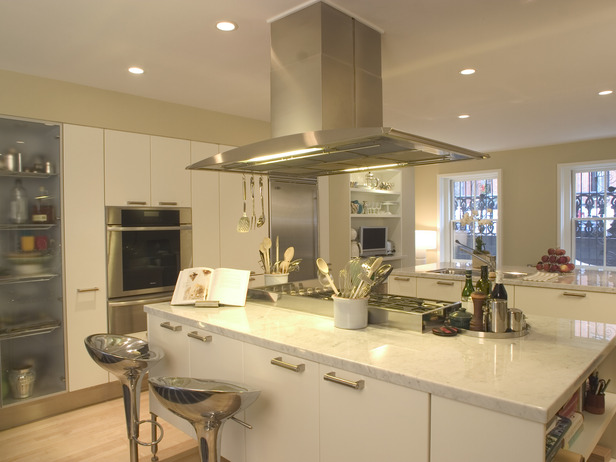
No question, a kitchen is higher cost and has even higher variability. Just a quick example on simple appliance choices, you can buy a nice refrigerator for $2k, dishwasher for $750, stove/oven for $2k, and range hood for $300. There are more basic and cheaper options available at maybe half that pricing. However, if you wanted to get a “higher end” kitchen appliance set, the starting prices could be as follows…6 burner 36″ Viking/Thermador range for $7k, Chimney hood for $1,500, dishwasher for $2k, wine fridge for $1k, Miele built-in expresso machine for $3,500, and a sub-zero refrigerator for $15k. For just the appliances alone, the cost of a good set can be had for $5k or go up a tier or two and add in a couple other appliances (wine, expresso) and you are now in for $25k. You haven’t started construction yet, picked out cabinets, countertop, lighting fixtures, changed the floor plan, upgraded electrical, or paid for any contractor labor. Thus, when I get pressed on providing a “cost range” for an “average” kitchen remodel that is still not an easy question to answer.

And as anyone can guess, the skill and efficiency and cost of a general contractor and sub-contractor run a wide range range. Often, labor is a big component of the overall budget. Lots of dynamics impact labor cost. Highly experienced and professional full service general contractor with a full team will be more expensive than a one person unlicensed person. Your timeline and how quickly you need it completed will impact cost. Type and complexity of project impacts many decisions. How well do you negotiate? How much risk in the project if something goes wrong? How are you structuring the arrangement with the contractor – fixed cost or cost+ markup. Who is paying for materials. Geographic location. Thus, when a friend from Denver asks about estimating costs vs. a client from Palo Alto, I can safely assume the labor cost for a contractor in Palo Alto will be higher than someone from Denver for the same work.

So a key question to ask yourself in evaluating whether to start a home remodeling job is how important is the “financial ROI” aspect of whatever you do vs. doing a remodel purely because this is the house you will be living in for the next 20 years and you don’t care about the specific style, taste, budget of your remodel and how others will perceive and value your work. That dynamic may help determine and drive what you decide to do, how you design your plans and what finishes/colors you end up choosing.

Again, for those who know me, know that I am not someone who likes to just throw out random numbers and prefer to provide lots of details and assumptions when I do use numbers whether to help provide comparable sales information, to analyze sports statistics or to provide direction on a project. When you do read articles online about home remodeling ROI, keep in mind, the statistics are for national averages/estimates and does not necessarily reflect the SF Bay Area’s valuations. But as always, feel free to contact me if you wanted to brainstorm anything regarding real estate or get my expert opinion about the upcoming March Madness college basketball tournament bracket!